
The field of photonics has witnessed impressive advancements, especially in the advancement of different modulators that play important roles in many optical applications. Among these, fiber acousto-optic modulators (AOMs) and their several variations, such as space AOMs and free-space AOMs, stand out due to their versatility and efficiency.
Among one of the most popular attributes in laser technology is ultra-narrow linewidth, commonly connected with single-frequency lasers. These lasers create light with an exceedingly narrow spooky size, making them perfect for various detailed applications, including systematic interaction systems and high-resolution spectroscopy. A fiber-coupled AOM, which incorporates the AOM into a fiber optic system, provides smooth combining with single-frequency fiber lasers. This assimilation demonstrates the pattern towards raised compactness and efficacy in optical systems without sacrificing performance.
The utility of fiber optic delay lines can not be overstated, specifically in creating innovative optical systems that need exact timing and synchronization. These delay lines harness the intrinsic residential or commercial properties of optical fibers to manage light signals properly, enabling scientists and designers to discover high-speed data transmission or detailed timing explores minimal loss of fidelity. The electric fiber optics delay line serves as a central element in this context, assisting in the manipulation of light signals to fit specific requirements.
Check out RF driver the current developments in photonics, concentrating on the crucial duty of fiber acousto-optic modulators in boosting laser applications, telecoms, and precision optical systems for varied sectors.
Modulators are critical in laser systems, playing a crucial function in transforming continuous wave results right into pulse layouts. Acousto-optic Q-switch modulators serve this exact objective, enabling quick modulation of laser results, which results in high-peak power pulses.
The distinction between acousto-optic switches and modulators is a critical facet of comprehending how these devices work in various circumstances. Acousto-optic buttons properly redirect light beams, hence allowing different routing performances within optical systems. In comparison, a modulator changes the light’s residential properties, straight influencing the beam’s attributes. This distinction marks their respective roles in laser systems and highlights the diversity of applications each device caters to.
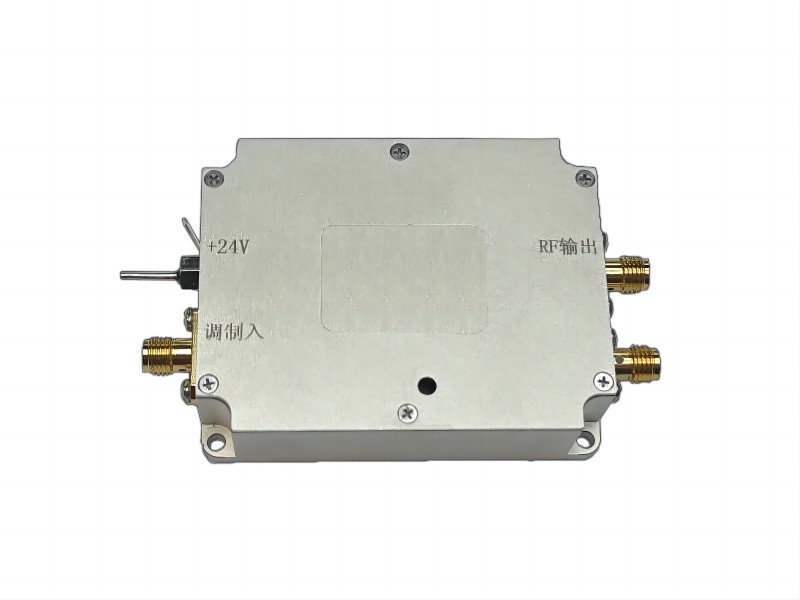
Acousto-optic devices have actually progressively gained traction out there, driven by the intensifying demand for advanced optical innovations. The acousto-optic modulator market is seeing substantial development due to applications in telecoms, armed forces systems, and commercial manufacturing. These devices are necessary for frequency shifting, beam of light steering, and signal handling. As modern technology develops, firms are creating ingenious options to address the needs for miniaturization, improved performance, and cost-effectiveness.
In addition, the attributes of narrow linewidth laser resources are essential to specific applications, where comprehensibility and precision are vital. Narrow linewidth fiber lasers exhibit steady discharge with minimal spooky spread, accommodating applications in fiber-optic interactions and noticing modern technologies. These high qualities are vital when managing long-distance information transmission, where signal degradation can considerably impact the top quality of information received. Combining these fibers with advanced modulators allows researchers to check out brand-new frontiers in optical communication systems.
Acoustic optical deflectors contribute to the flexibility of optical systems, using a way to manipulate light dynamically and effectively by using acoustic waves as the managing device. Such devices can be found in different applications, from laser scanning systems to sophisticated imaging methods. By utilizing the principles of acousto-optics, these deflectors assist in achieving fast and precise modifications in the beam’s trajectory without the need for complicated mechanical components.
In discovering the sorts of pulse modulation, one understands the details and variety inherent in the field. Pulse modulation methods, such as pulse-width modulation (PWM) and pulse-position modulation (PPM), allow control of light based upon discharge to create varying signal types. These strategies cultivate advancements in photonics and electronic devices, from regulating laser outputs to improving the performance of fiber optic systems.
Additional factor to consider of optical passive components reveals their crucial duty in improving system reliability. These components, that include isolators, couplers, and filters, facilitate the company and management of light within intricate optical setups without the need for active involvement. Their payment to total system performance is essential, mostly when incorporated with modulators and various other vibrant optical devices. Especially, the seamless assimilation of passive and active components specifies the capability of contemporary photonic systems.
The expanding focus on space applications highlights the need for reliable and durable optical systems that can operate successfully in severe conditions. Space acousto-optic modulators, particularly, fit the distinct needs of space missions, where factors such as radiation exposure and temperature variations can substantially affect capability. The development of space-grade acousto-optic devices makes certain that interaction and data collection continue to be undisturbed in the rough settings of space.
Acousto-optic Q-switching represents among the most efficient approaches of generating high-energy pulses, crucial for applications ranging from laser noting to clinical treatments. The modulation capabilities inherent in AOMs allow them to adjust to differing needs, optimizing pulse duration and power output. They offer an innovative pathway to elevate laser applications across diverse areas.
As we dig even more into the future of photonics, it comes to be progressively clear that advancement in laser modulators and acousto-optic technologies is crucial. The advancements in modulator drivers boost the efficiency with which EOMs and aoms operate, enabling much faster and more trusted performance. The crossover in between growths in modulation and the boosting demand for greater transmission capacity and lower latency in communication systems suggests a future rich with possibilities for strengthened optical interactions.
Recognizing the essential mechanics that underpin acoustic optical modulators will certainly lead to superior layout and performance renovations as research study proceeds to thrive. The exploration of brand-new products, assimilations, and strategies in areas like micro-nano construction will likely produce devices with even finer control and prolonged functional lifetimes. These advancements not just guarantee improved capability for existing systems however welcome completely new applications within arising technologies in quantum computing, robotics, and advanced production.
In summary, the domain of acousto-optic modulators and relevant fiber-optic innovations personifies quick progress and complexity, functioning as foundational elements within numerous modern-day optical applications. With the growing demand for accuracy and high efficiency in various industries, the advancement of acousto-optic devices, such as fiber AOMs, remains to develop, adapting to brand-new difficulties and chances. As scientists and designers push the borders of advancement, these devices will certainly continue to be central to shaping the future of optical communication, laser applications, and beyond, proclaiming a brand-new era of technological advancement.